Published: | Updated:
Quick answer: A good watering routine starts with getting to know your plant. Check the soil regularly and notice how quickly it dries between waterings. You may need to water sooner in a warm, bright room and wait longer when growth slows.
The most important thing you must learn as a fiddle leaf fig owner is how and when to water a fiddle leaf fig.
Watering your ficus lyrata should be the easiest part of caring for it.
But one expert says you should drench it, while another claims you must measure each drink.
Some gurus say fiddles need to be watered every few days while others say it must dry out completely, which can mean weeks between waterings.
The useful starting point is your own plant: check the potting mix and drainage, then adjust the interval to the conditions in your home.
How Often to Water Your Fiddle Leaf Fig
When you first bring home a fiddle leaf fig, assess its size and condition.
Plant height alone does not determine how much water a fiddle leaf fig needs. Check the soil moisture, pot size, drainage and growing conditions before watering.
Our all-organic Premium Fiddle Leaf Fig Potting Soil is one option. Organic materials can help a potting mix hold moisture and nutrients; the right mix must also allow air and excess water to move through it. Keep checking moisture after repotting, because a different mix may dry at a different rate.

Our fast-draining, well-aerated soil is designed to correct brown spots, prevent dropping leaves, and encourage new growth.
Enjoy healthy, dark green leaves and stop stressing about your plant!
BUY PREMIUM FIDDLE LEAF FIG POTTING SOILA larger root ball may need more water to become evenly moist, but the correct amount also depends on the container and potting mix.
When the upper soil has dried and the root ball is no longer wet, water evenly until excess drains from the pot, then empty the saucer.
However, you’ll find pretty quickly that you must adjust this amount and frequency based on the following factors.
How Much Water to Give Your Fiddle Leaf Fig
When it comes to learning when to water a fiddle leaf fig, you want to remember: warmth and light.
Indoors, give your fiddle leaf fig bright, indirect light. Acclimate it gradually to stronger light, and protect it from harsh afternoon sun. A warmer, brighter setting can dry the mix faster, so check it more often rather than assuming a fixed number of cups will be enough.
When the plant needs water, moisten the root ball evenly and let excess drain away. Adjust when you water next according to how quickly the mix dries.
Outdoor plants in hot weather may need more frequent checks than indoor plants. The soil and drainage should determine whether watering is needed; location alone does not set the schedule.
For a plant indoors or in cooler conditions, allow more time between waterings if the potting mix is drying slowly.
In lower light or cooler conditions, the mix may stay moist longer. A moisture meter can help track the trend, but check the soil as well instead of treating a reading as an exact measure of the plant’s needs.
Under-Watering and Over-Watering
After checking light, pot size and drainage, use changes in the plant as prompts to investigate—not as a diagnosis by themselves.
Compare leaf symptoms with soil moisture and recent care changes. Drooping, yellowing and brown spots can have more than one cause.
Under-Watering
- Dry soil together with drooping leaves can indicate thirst.
- Dry, crisp leaf edges can accompany a shortage of water, but also check for other stresses.
- Prolonged dryness can cause leaf damage and leaf drop. Check the root ball before adding water, because persistently wet roots can produce similar symptoms.
Over-Watering
- Soggy soil
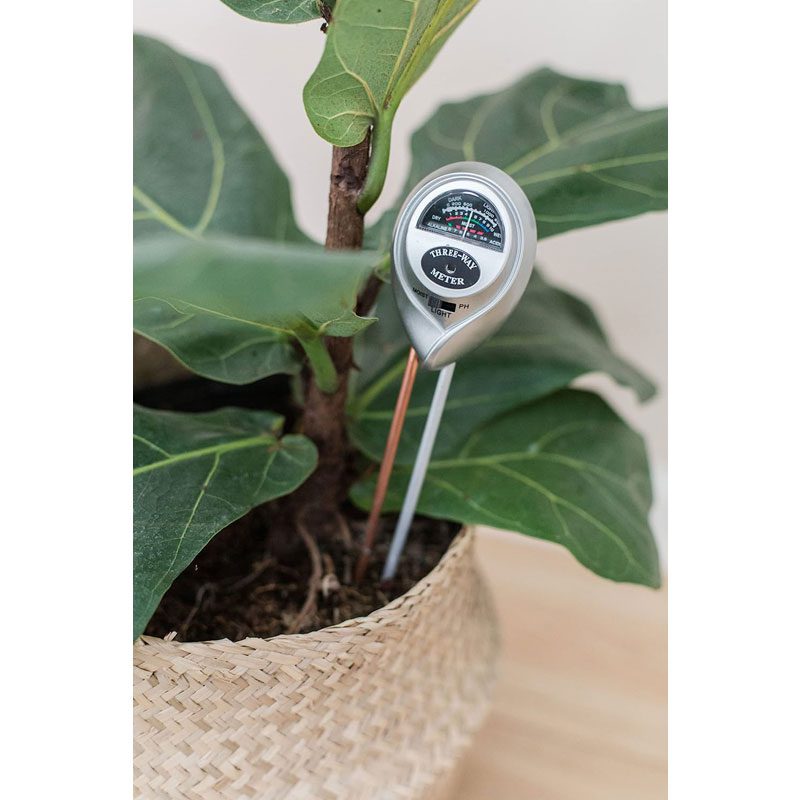
To test the lower moisture levels of your potting mix, use a moisture meter. If you don’t know how to use one, check out our helpful moisture meter tutorial.

We've designed a professional grade meter for home use!
Use our three-way meter to give you accurate readings on how much water to give them, whether they are in the right place for sunlight and soil pH values.
BUY FIDDLE LEAF FIG SOIL METER- Brown patches or yellowing leaves alongside persistently wet soil are reasons to check drainage and root health. Leaf colour alone cannot confirm root rot.
If you suspect root rot, inspect the roots: dark, soft roots are concerning, while healthy roots are firm. For next steps, read Everything You Need to Know About Root Rot in Fiddle Leaf Figs. If using our Root Supplement, follow its current label; also address the drainage and watering conditions.
Which Water is Best for a Fiddle Leaf Fig?
Water quality is another factor to consider, but brown leaf edges do not establish that tap water is the cause. Review watering, drainage and light too. The video above discusses water choices and temperature.
Fiddle Leaf Fig Watering Routine Wrap-Up
This older video discusses a cup-based watering method. A fixed cup amount does not suit every plant or pot; use the soil checks and drainage-based instructions in this article to guide your own routine.
Check soil moisture before each watering. When water is needed, moisten the root ball evenly, allow excess to drain, and adjust the interval as conditions change.
Then, based on its living conditions and cues, more or less in both volume and frequency from there.
Do you still have questions about how and when to water a fiddle leaf fig? Hop on over to our free Facebook community called the Fiddle Leaf Fig Plant Group, and fellow fiddle owners will help as they can.
Grab the Essentials for Your Fiddle Leaf Fig:
- All-Organic Premium Fiddle Leaf Fig Potting Soil
- Fiddle Leaf Fig Plant Food
- Root Rot Treatment
- Houseplant Leaf Armor to protect against insects, bacteria, and fungus (As an added bonus, it also cleans and adds shine to your plant’s leaves!)
- Moisture meter to always know when your plant is thirsty.
To learn more:
- Sign up for our free Fiddle Leaf Fig Care 101 Webinar for advanced fiddle leaf fig care.
- Make sure you’re subscribed to our newsletter.
- Read The Fiddle Leaf Fig Expert, your complete guide to growing healthy fiddle leaf fig plants. The book is available in full-color paperback or Kindle edition on Amazon now!
- Click to join our community on Facebook: Fiddle Leaf Fig Plant Resource Group.