Published: | Updated:
Is Your Fiddle Leaf Fig Drying Out?
Is your fiddle drying out even though you haven’t changed its care? A warmer room, air from a nearby vent, soil that’s hard to rewet, or roots that have outgrown the pot may explain it. Start by checking the soil: dry-looking leaves alone don’t tell you whether your fiddle needs more water.
Many of us worry about overwatering our fiddles, and for good reason. Soil that stays wet for too long can damage roots and contribute to root rot. But watering too little can cause trouble too.
But some of us swing too far to the other end of the spectrum and accidentally under-water our fiddles, which can be just as dangerous.
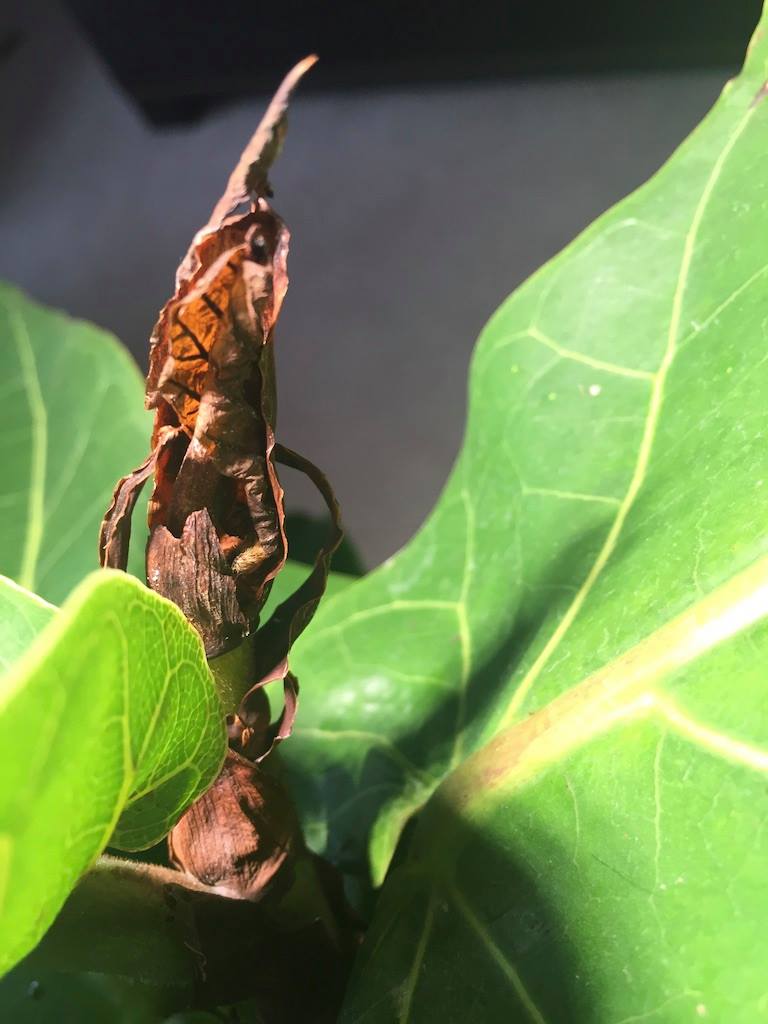
Crispy, dead parts of a leaf won’t turn green again, though a drooping leaf may perk up once the underlying problem is corrected. Helping your fiddle recover starts with finding out what has changed.
Sometimes we under-water our trees without realizing it, and sometimes our tree will suddenly dry out for seemingly no reason, even when we haven’t changed anything in their care routine.
Here are 4 sneaky reasons why your fig may suddenly be drying out, and what to do about them.
4 Sneaky Reasons Why Your Fiddle Leaf Fig Is Drying Out
1. Increased temperature
A lot of people run into this issue in the spring and summer, when a warmer room can make the soil dry faster.
They may be giving their fiddles the same amount of water each week but then wonder why their fiddle leaf fig is drying out!
Temperature and humidity affect a fiddle’s water needs, along with light, pot size, and other conditions. A seasonal change is a reason to check the soil more closely, rather than automatically increasing the amount of water.
As the weather changes, check the soil more often with your finger, a wooden stick, or a moisture meter. If the top inch feels dry and the soil is no longer wet deeper down, it may be time to water sooner than usual. Water slowly and thoroughly, then let the pot drain.
Continue reading to find out why your fiddle leaf fig is drying out and how to correct it.
2. Heating and air conditioning
Many of us use air conditioning, space heaters, or a furnace to stabilize temperatures in our houses. Unfortunately, indoor climate control forces a lot of dry air through the vents in our homes, which can wreak havoc on humidity-loving fiddle leaf figs.
If your fig’s leaves start drying out but the soil isn’t bone-dry, make sure your plant isn’t near an A/C vent. If it is, close the vent or find a better location for your fiddle. This is a sneaky culprit of why your fiddle leaf fig is drying out.
3. Soil that’s hard to rewet
Very dry potting mix can become hard to rewet. If it has pulled away from the edges of the pot, water may run down the gap without reaching the roots. Dense, compacted soil is a different problem: it leaves less room for air and may stay wet too long.
Try watering slowly in a few passes so the mix has time to absorb water. Afterward, check that the root ball feels moist, rather than assuming runoff means the whole pot has been watered.
If water still runs straight through, check whether the mix is absorbing it and whether roots have filled the pot. These need different fixes, so take a look before reaching for a bigger container.
If the mix has broken down or the roots are crowded, it may be time to repot. Handle the roots gently and loosen only what’s needed; you don’t have to strip away all the old soil. Our all-organic fiddle leaf fig potting soil is one option. Organic materials in a well-aerated mix can hold moisture while leaving air around the roots, but the pot still needs to drain well.
If you’re unsure whether to repot, start with how well the soil wets and dries between waterings. Avoid repeatedly poking through a dense root ball, which can damage roots.
4. Roots that have outgrown the pot
A fiddle can outgrow its nursery pot—or any other pot. When roots take up most of the space, there’s less potting mix left to hold moisture, so it may dry out quickly.
Drainage holes are a good thing! A plastic nursery pot can work well indoors as long as the roots have room, the mix absorbs water, and excess water can drain away.
Check for roots crowding the pot or growing through its drainage holes. Water running straight through can be a clue, but dried-out mix can do that too, so check both before deciding what to change.
Repot if the roots need more room or the mix no longer works well. Otherwise, give a newly purchased fiddle time to settle in and adjust watering to its new home. There’s no need to repot simply because it came in a nursery pot.
Monitor Your Fiddle’s Soil
The best way to keep your fiddle from drying out is to get to know how its soil feels between waterings. Check the top inch and deeper in the pot, especially when the room conditions change.
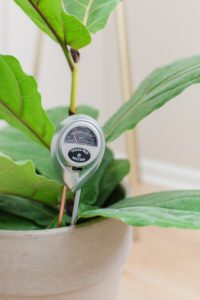
Use your finger, a wooden stick, or a moisture meter like this one to check your plant’s soil a few times per week, and more if you’ve just brought it home and are still getting to know it or if the seasons are transitioning.
These checks will help you spot changes early and adjust your routine as your fiddle grows. You don’t need a perfect calendar—just a little attention to what your plant and its soil are telling you.
To learn more:
- Sign up for our free Fiddle Leaf Fig Care 101 Webinar for advanced fiddle leaf fig care.
- Make sure you’re subscribed to our newsletter.
- Read The Fiddle Leaf Fig Expert, your complete guide to growing healthy fiddle leaf fig plants. The book is available in full-color paperback or Kindle edition on Amazon now!
- Click to join our community on Facebook: Fiddle Leaf Fig Plant Resource Group.
Grab the Essentials for Your Fiddle Leaf Fig:
- Premium Fiddle Leaf Fig Potting Soil
- Fiddle Leaf Fig Plant Food
- Root Rot Treatment to treat one of the most common issues affecting fiddle leaf figs.
- Houseplant Leaf Armor to protect against insects, bacteria, and fungus (As an added bonus, it also cleans and adds shine to your plant’s leaves!)
- Moisture meter to always know when your plant is thirsty.